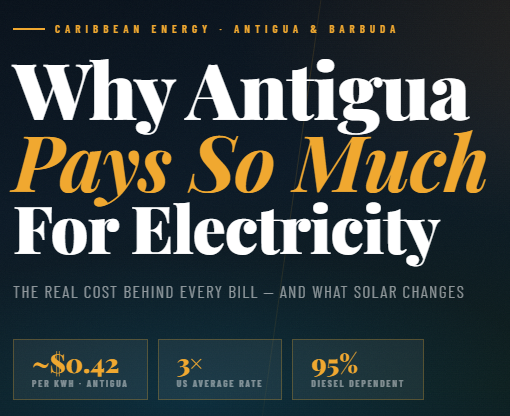
At EC$0.45 per kilowatt-hour, Antiguans pay electricity rates among the highest in the Eastern Caribbean. Understanding why rates are this high is the first step toward changing the picture.
A Grid Built on Imported Diesel
APUA and APCL generate virtually all of Antigua's electricity from imported diesel and heavy fuel oil. Every movement in global oil prices lands on consumers' bills through a monthly fuel surcharge that ranged from EC$0.08 to EC$0.19/kWh in 2025. The grid remains over 95% fossil fuel dependent as of 2026.
Aging Infrastructure
APCL operates generation equipment dating partly to the 1980s and 1990s. Older generators run at 35–40% thermal efficiency versus 55–60% for modern plants. Maintenance on aging assets trends upward, and those costs flow through to the rate base. APUA's 2026 filing cited infrastructure maintenance as a primary justification for its proposed 6.8% base rate increase.
The Monopoly Structure
APUA holds a statutory monopoly over electricity transmission and distribution. Without competition, normal market pressure on prices does not apply. Rate increases require regulatory review, but in a small jurisdiction with limited institutional capacity, that process has real constraints.
What This Means for Solar
High electricity rates are the single most powerful driver of rooftop solar economics. At EC$0.45/kWh, a 5kW residential system saves approximately EC$8,100/year. If APUA's proposed increase to EC$0.496/kWh is approved, that rises to EC$8,900 — shortening payback from 7.8 to 7.1 years. The Wadadli Solar Calculator lets you run the numbers for your situation.